

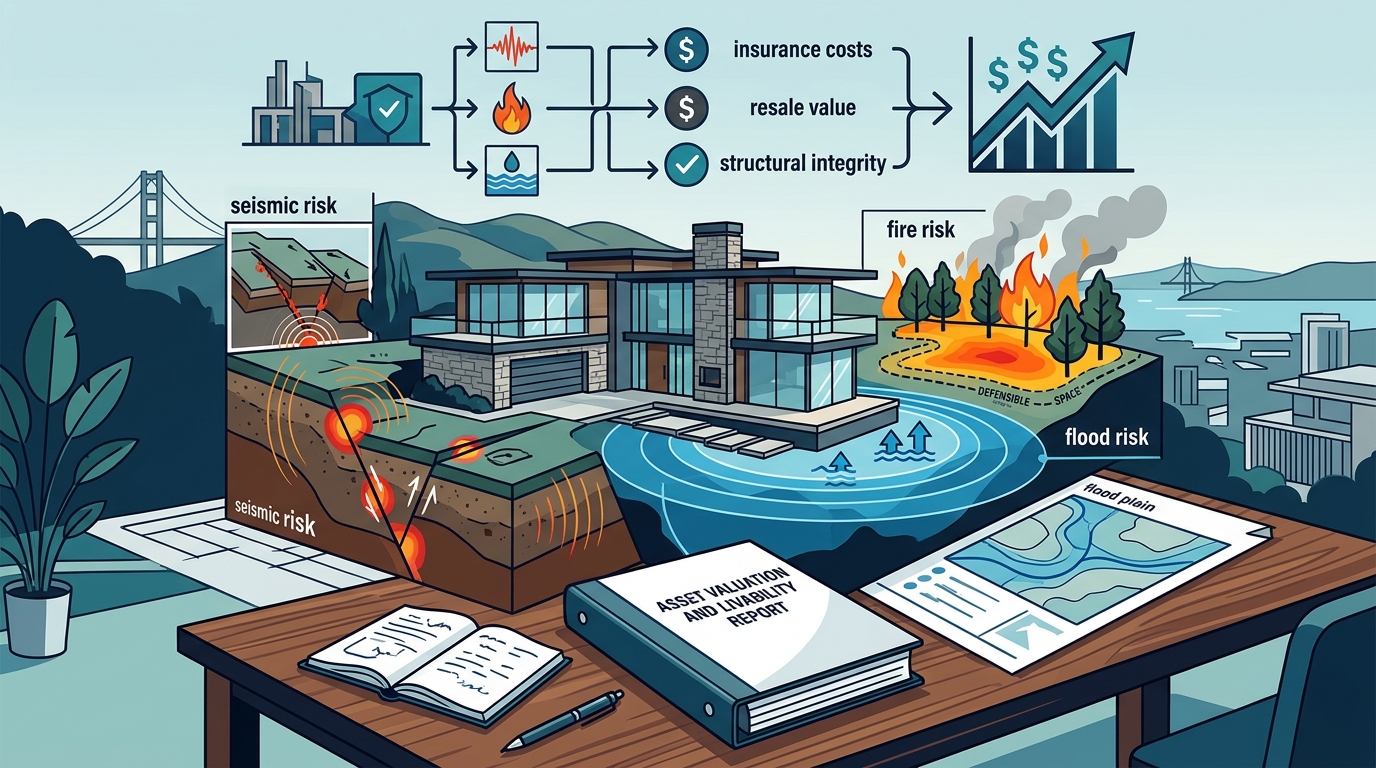
Natural disaster risk is a critical financial and safety factor that must be rigorously evaluated before purchasing a luxury home in the San Francisco Bay Area. At Philip Farr Properties, we treat hazard exposure not as a minor footnote, but as a core component of asset valuation and long-term livability. Understanding seismic, fire, and flood zones directly impacts insurance costs, resale value, and structural integrity. This guide explains how to quantify these risks and integrate them into your buying strategy with precision and confidence.
Seismic Exposure and Structural Resilience
Wildfire Zones and Defensible Space
Climate change has intensified the wildfire season in Northern California, making fire risk a primary concern for properties in Marin County and the East Bay hills. Wildfire risk is the likelihood of a fire reaching a structure due to proximity to vegetation and topography. The California Department of Forestry and Fire Protection (CAL FIRE) designates Very High Fire Hazard Severity Zones (VHFHSZ) where stricter building codes apply. Luxury estates in areas like Mill Valley or Belvedere often sit within these zones. Buyers must evaluate the property's defensible space, which is the cleared area around a structure that reduces fire spread. Look for ember-resistant vents, Class A roofing, and cleared vegetation within 30 feet of the home. Insurance premiums in VHFHSZ areas can be significantly higher, and some carriers may refuse coverage entirely. This financial reality must be factored into your total cost of ownership.
Flood Zones and Drainage Infrastructure
While San Francisco is not prone to major river flooding, localized flooding and stormwater runoff remain significant risks, particularly in low-lying areas and near the coast. Flood risk is the potential for water to inundate a property due to heavy rainfall, storm surges, or inadequate drainage. The Federal Emergency Management Agency (FEMA) maps identify Special Flood Hazard Areas, but these maps do not capture every drainage issue. Luxury homes in neighborhoods like the Marina or SoMa may face risks from king tides or intense storm events. Evaluate the property's elevation relative to the street and check for signs of past water intrusion, such as mold or warped flooring. Proper grading and French drains are critical mitigations. Understanding these nuances helps you avoid properties with chronic moisture problems that can compromise high-end finishes and structural elements.
Insurance Implications and Financial Planning
Resale Value and Market Perception
Buyers and lenders increasingly scrutinize natural hazard exposure, which can impact a property's liquidity and resale value. Market perception is the collective view of buyers regarding a property's risk profile. Homes in high-risk zones may take longer to sell or require price adjustments to attract qualified buyers. However, properties with documented mitigations, such as seismic retrofits or fire-resistant landscaping, can command a premium. Transparency about hazard exposure and completed upgrades builds buyer confidence. When selling, providing a comprehensive hazard report and engineering documentation can differentiate your property in a competitive market. This strategic approach turns potential liabilities into selling points, demonstrating stewardship and foresight.
Key Takeaways
- Seismic risk is a primary concern in San Francisco; always request recent engineering reports for older homes.
- Wildfire risk in Marin and the East Bay requires evaluation of defensible space and VHFHSZ designation.
- Flood risk, while less common, must be assessed through elevation and drainage infrastructure checks.
- Insurance costs for earthquake and fire can be substantial and must be included in your total budget.
- Documented hazard mitigations can enhance resale value and marketability.
- Transparency about risk and completed upgrades builds trust with future buyers.
Frequently Asked Questions
How much does earthquake insurance cost for a luxury home?
Earthquake insurance premiums vary based on the home's replacement cost, construction type, and seismic zone. For a high-value property, expect premiums to be a percentage of the total replacement cost, often ranging from 1% to 3% annually.
What is a defensible space in wildfire zones?
Defensible space is the cleared area around a home, typically 30 to 100 feet, that reduces the risk of fire spreading to the structure. It involves removing dry vegetation and using fire-resistant landscaping.
Do older Victorian homes have higher seismic risk?
Older homes may have higher seismic risk if they lack modern retrofitting. However, many have been upgraded with shear walls and bolted foundations. An engineering assessment is necessary to determine the current risk level.
How does flood risk affect insurance premiums?
Properties in FEMA-designated flood zones require flood insurance, which can significantly increase premiums. Even outside these zones, evidence of past water intrusion can lead to higher rates or coverage exclusions.
Can hazard mitigations increase a home's value?
Yes, documented mitigations such as seismic retrofits or fire-resistant landscaping can increase a home's value by reducing perceived risk and demonstrating proactive maintenance.
Conclusion
Natural disaster risk is an inescapable reality of Bay Area living, but it is a manageable one with the right expertise and due diligence. By rigorously evaluating seismic, fire, and flood exposures, you can make informed decisions that protect your investment and ensure your safety. At Philip Farr Properties, we bring deep local knowledge and a commitment to thorough analysis to every transaction. We guide you through the complexities of hazard assessment, helping you navigate insurance requirements and structural considerations with confidence. To begin your search with a focus on safety and long-term value, contact us for a private consultation. Learn more: Contact PFP.