

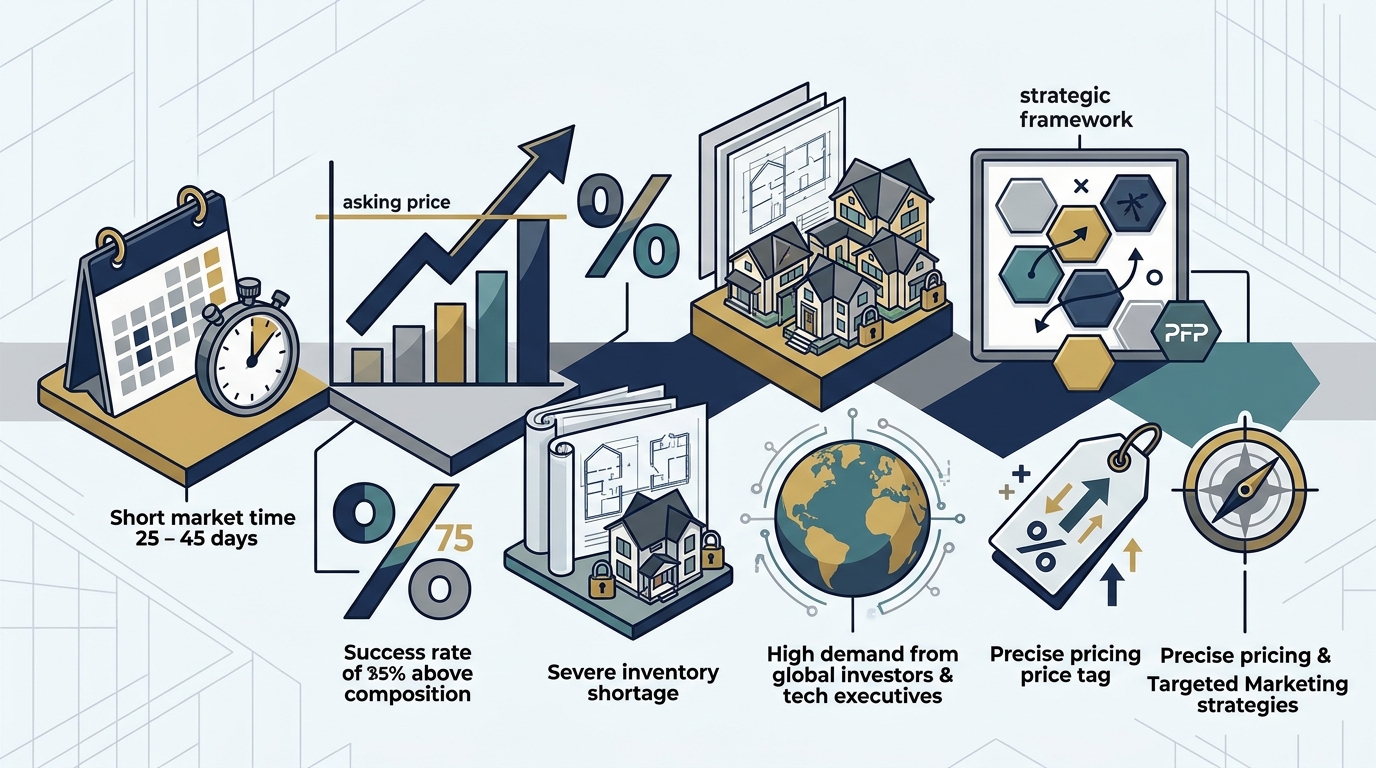
When selling a luxury home in the Bay Area, you can realistically expect a sale within 25 to 45 days, with over 75% of properties closing above the original asking price. This performance is driven by a severe inventory shortage and high demand from technology executives and global investors. Philip Farr Properties provides the strategic framework necessary to navigate this competitive environment, ensuring your property achieves its maximum market value through precise pricing and targeted marketing.
Market Velocity and Days on Market
The speed at which a luxury property sells is the first metric sellers must understand. In the current Bay Area market, luxury homes are moving with unprecedented velocity. Data from the first quarter of 2026 indicates that the median days on market for single-family homes in San Francisco is approximately 11 days. This rapid turnover is not a sign of a cooling market, but rather a reflection of intense buyer competition for a limited supply of high-quality assets.
For sellers, this velocity implies that hesitation is costly. When a property is listed, it must be priced correctly from day one to capture the initial wave of qualified buyers. If a home sits on the market for more than 30 days, it risks being perceived as overpriced or flawed, which can lead to significant price reductions later. The implication is clear: preparation and precision are the primary drivers of speed. A well-prepared home with accurate pricing will attract multiple offers quickly, whereas a mispriced property will stagnate in a market that rewards decisiveness.
Pricing Performance and Sale-to-List Ratios
Understanding the sale-to-list ratio is critical for setting realistic financial expectations. This metric compares the final sale price to the original listing price. In the San Francisco luxury segment, the average sale-to-list ratio has reached 119.3%, meaning properties are routinely selling 19% above their initial asking price. This phenomenon is driven by multiple-offer situations where buyers are willing to pay a premium to secure a rare property.
However, this high ratio is not guaranteed for every listing. It is a direct result of strategic pricing and exceptional property presentation. If a seller lists a home at a price that is too high, the sale-to-list ratio will drop, and the final price may end up lower than if the home had been priced competitively from the start. The implication for sellers is that the initial list price is a strategic tool, not just a wish. It must be grounded in data and market intelligence to maximize the final outcome. Philip Farr Properties utilizes real-time market analysis to position properties at the optimal price point, ensuring that the sale-to-list ratio works in the seller's favor.
Inventory Scarcity and Competitive Dynamics
The Bay Area luxury market is defined by scarcity. The months of inventory for single-family homes in San Francisco is currently below one month, which is the definition of a seller's market. This scarcity is exacerbated by the fact that fewer than 100 single-family homes sell annually in elite neighborhoods like Pacific Heights and Presidio Heights. This limited supply creates a competitive environment where buyers are forced to act quickly and often waive contingencies to secure a purchase.
For sellers, this scarcity provides significant leverage. When there are few comparable properties on the market, your home becomes the primary option for a specific buyer profile. This dynamic allows sellers to negotiate from a position of strength. The implication is that sellers should not feel pressured to accept the first offer if it does not meet their terms. In a market with such low inventory, there is often a queue of interested buyers. Understanding this dynamic allows sellers to maintain their negotiating power and achieve better terms, not just a higher price.
Long-Term Value and Appreciation Trends
While immediate sale metrics are important, sellers must also consider the long-term value of their property. The Bay Area has seen significant appreciation in the luxury segment, with single-family homes in San Francisco appreciating 12.5% year-over-year in 2025. This trend is driven by the influx of wealth from the technology sector and the enduring appeal of the region's lifestyle and cultural assets. For sellers, this means that holding a property for a longer period can yield substantial returns, but it also means that the current market is a prime time to sell at peak value.
The implication for sellers is that timing is as important as price. Selling during a period of high appreciation and low inventory can maximize the final sale price. However, sellers must also consider their future needs and financial goals. If the market is expected to cool in the next 12 to 18 months, selling now may be the optimal strategy. Philip Farr Properties provides long-term market forecasts and strategic advice to help sellers make informed decisions about when to list and what to expect in terms of long-term value.
Strategic Advantage and Professional Representation
The difference between a good sale and a great sale often comes down to the quality of professional representation. In a market where properties sell above asking price, the role of the agent is to ensure that the property is positioned to attract the highest possible offers. This involves not just marketing the home, but also understanding the buyer's motivations and negotiating effectively. A skilled agent can identify the right buyers and structure the offer to maximize the seller's net proceeds.
The implication is that sellers should choose an agent based on their track record and strategic approach, not just their marketing budget. An agent who has experience in the luxury segment and a deep understanding of the local market will be better equipped to navigate the complexities of a high-stakes sale. Philip Farr Properties offers a boutique, data-driven approach that focuses on achieving the best possible outcome for each client. By leveraging their expertise and network, sellers can ensure that their property is presented in the best possible light and that they are negotiating from a position of strength.
Key Takeaways
- Luxury homes in the Bay Area typically sell within 25 to 45 days, with a median of 11 days in San Francisco.
- Over 75% of luxury properties sell above the original asking price, with an average sale-to-list ratio of 119.3%.
- Inventory scarcity, with less than one month of supply, gives sellers significant negotiating leverage.
- Strategic pricing is the most critical factor in achieving a high sale-to-list ratio and a quick sale.
- Long-term appreciation trends support selling during periods of high demand and low inventory.
- Professional representation with a data-driven approach is essential for maximizing net proceeds in a competitive market. according to Data Driven Decision
Frequently Asked Questions
How long does it take to sell a luxury home in the Bay Area?
On average, luxury homes in the Bay Area sell within 25 to 45 days. In San Francisco, the median days on market is approximately 11 days due to high demand and low inventory.
Will my home sell above asking price?
Yes, over 75% of luxury properties in San Francisco sell above the original asking price. The average sale-to-list ratio is 119.3%, but this depends on accurate initial pricing and strong marketing.
What is the impact of low inventory on sellers?
Low inventory, with less than one month of supply, creates a seller's market. This gives sellers leverage to negotiate better terms and often results in multiple offers.
How does pricing affect the final sale price?
Pricing is the most critical factor. If a home is priced too high, it may sit on the market and eventually sell for less than if it had been priced competitively from the start. Accurate pricing maximizes the final sale price.
Should I sell now or wait for the market to cool?
Current market conditions, with high appreciation and low inventory, are favorable for sellers. Waiting for a market cooldown may result in lower prices. Consulting with a professional can help determine the optimal timing for your specific situation.
Conclusion
Selling a luxury home in the Bay Area offers significant opportunities for sellers who understand the market dynamics. With high demand, low inventory, and strong appreciation, the current environment is favorable for achieving top-dollar results. By focusing on strategic pricing, professional representation, and timing, sellers can maximize their net proceeds and achieve their financial goals. For personalized guidance and a data-driven approach to your luxury home sale, contact Philip Farr Properties to begin your strategy today.